Lahore was the glittering capital of the Sikh Empire. Maharaja Ranjit Singh took the city in 1799 and ruled from here until his death in 1839, and the Sikh state he built lasted until 1849. Even today, Lahore is dotted with traces of that imperial past, from the grand Samadhi of Ranjit Singh to historic Gurdwaras tucked within the narrow lanes of the Walled City.
For a Sikh pilgrim, Lahore is more than a city of monuments. It holds the place where Guru Arjan Dev Ji was martyred, the birthplace of Guru Ram Das Ji and the memory of many Sikh martyrs. This guide walks you through 10 must-visit Sikh heritage sites in Lahore, with practical tips and a suggested one-day route from the SikhTour.pk team.
Lahore Sikh Heritage Trail at a Glance
- Number of sites: 10
- Best time to start: Early morning, between 7 and 10 AM
- Time needed: One full day for the main sites
- Best way to explore: On foot or by rickshaw in the Walled City, with a guide
- Key sites: Samadhi of Maharaja Ranjit Singh, Gurdwara Dera Sahib, Gurdwara Janam Asthan Guru Ram Das Ji, Lahore Fort, Gurdwara Shahid Ganj Bhai Taru Singh
Lahore: The Former Capital of the Sikh Empire
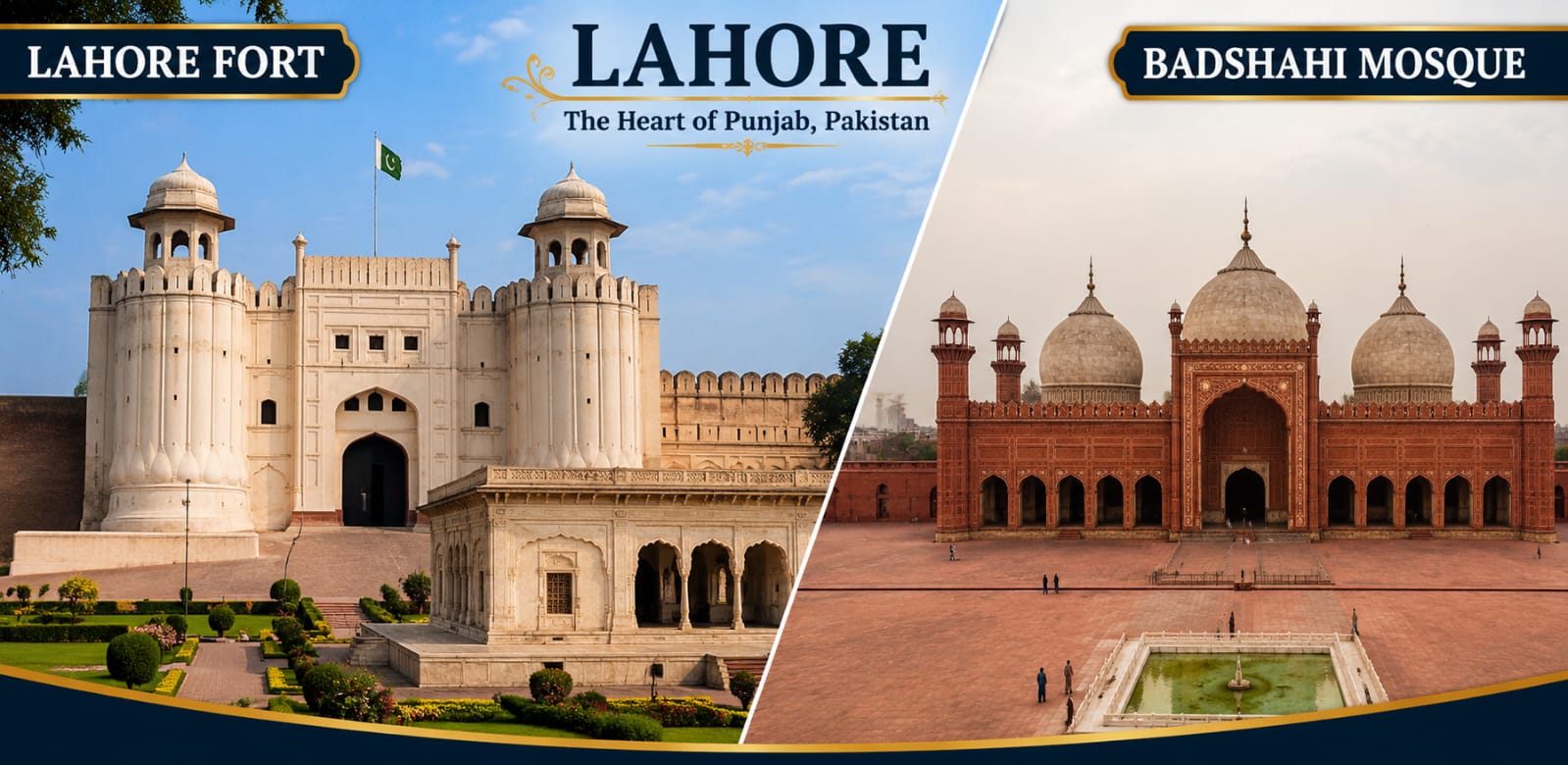
Under Maharaja Ranjit Singh, Lahore became the centre of a powerful Sikh kingdom. The Maharaja lived and held court in the Lahore Fort, and the royal quarter around the Fort, the Hazuri Bagh and the Badshahi Mosque still carries the marks of Sikh rule. Beyond the royal quarter, the lanes of the Walled City hold older Gurdwaras linked to the Gurus themselves.
The Lahore Sikh Heritage Trail: 10 Must-Visit Sites
1. Samadhi of Maharaja Ranjit Singh
The Samadhi (mausoleum) of Maharaja Ranjit Singh stands next to the Lahore Fort and the Badshahi Mosque. It was completed in the 1840s and combines Sikh, Mughal and Hindu architectural features, with pavilions, marble and sandstone work and a fluted, lotus-shaped dome. It is a must-see for every Sikh pilgrim visiting Lahore, and it sits right beside Gurdwara Dera Sahib, so the two are usually visited together.
2. Gurdwara Dera Sahib
Gurdwara Dera Sahib marks the place associated with the martyrdom of Guru Arjan Dev Ji, the fifth Sikh Guru, in 1606. It is one of the most emotionally significant Sikh sites in Lahore. The shrine dates to the Sikh period, and the Gurdwara is especially busy around the Guru's martyrdom day in June, when large groups of pilgrims visit.
3. Gurdwara Janam Asthan Sri Guru Ram Das Ji
Hidden within the bustling lanes of Chuna Mandi in the Walled City, this Gurdwara marks the birthplace of Guru Ram Das Ji, the fourth Sikh Guru, who was born in Lahore in 1534. Guru Ram Das Ji later laid the foundations of the city of Amritsar. Visiting this quiet Gurdwara in the middle of a busy bazaar is a memorable part of the trail.
4. Lahore Fort (Shahi Qila)
The Lahore Fort is a UNESCO World Heritage Site, listed in 1981 together with the Shalimar Gardens. It has Mughal roots, but the Sikh period left its own additions, including the Baradari pavilion in Hazuri Bagh built during Maharaja Ranjit Singh's reign. The Fort was the Maharaja's seat of power and is the heart of the Sikh heritage story in Lahore.
5. Hazuri Bagh
Hazuri Bagh (Garden of Presence) lies between the Lahore Fort and the Badshahi Mosque. During Ranjit Singh's reign it was a ceremonial garden where the Maharaja held court, and its central Baradari pavilion is a landmark of Sikh-era Lahore. It is an easy and peaceful stop between the bigger monuments.
6. Sikh Gallery, Lahore Fort
The Sikh Gallery at the Lahore Fort displays artefacts from the Sikh Empire, including weapons, coins, portraits and documents. It helps visitors connect the buildings they have seen with the people and history behind them. Opening hours and displays can change, so please check before you go.
7. Gurdwara Shahid Ganj Bhai Taru Singh
Located in the Naulakha area of Lahore, this Gurdwara commemorates Bhai Taru Singh, a young Sikh who was tortured and executed in 1745 after refusing to cut his hair. It is a place of remembrance for the Sikh martyrs of the 18th century and is deeply respected by pilgrims.
8. Chuna Mandi Historic Area
A walk through Chuna Mandi in the Walled City shows old havelis, wells and lanes that carry the character of earlier centuries. Sikh-era buildings stand beside much older ones, and the Gurdwara of Guru Ram Das Ji sits in the middle of it all. Walking with a guide helps you read the layers of history around you.
9. Anarkali Bazaar Area
Anarkali is one of the oldest and most atmospheric markets in Lahore. It has strong links to the Sikh period, when the tomb of Anarkali was used as a residence by senior figures of the Sikh court. Today it is a good place to shop for souvenirs and to feel the everyday life of the city.
10. The Zamzama Cannon
The Zamzama cannon, also called "Kim's Gun" after Rudyard Kipling's novel, was cast in 1757 and later became a prize of the Sikh Misls. It was captured by Maharaja Ranjit Singh's forces in 1802, which gives it a direct place in Sikh history. It stands in front of the Lahore Museum on Mall Road and is one of the city's best-known landmarks.
Suggested One-Day Route
- Morning: Lahore Fort, Hazuri Bagh and the Sikh Gallery
- Late morning: Samadhi of Maharaja Ranjit Singh and Gurdwara Dera Sahib
- Afternoon: Lunch, then Chuna Mandi and Gurdwara Janam Asthan Guru Ram Das Ji
- Late afternoon: Gurdwara Shahid Ganj Bhai Taru Singh
- Evening: Anarkali Bazaar and the Zamzama Cannon
Practical Tips for the Lahore Heritage Trail
The Walled City of Lahore is best explored on foot or by rickshaw. Walking lets you take in the atmosphere of this ancient city at your own pace.
- Best time to visit: Early morning (7 to 10 AM), before the crowds and heat build up
- Guided tours: A knowledgeable guide is very helpful for finding your way around the Walled City
- Food: Do not miss breakfast at Lahore's famous halwa puri stalls, a Punjab tradition
- Dress: Modest clothing, and cover your head when entering any Gurdwara
- Safety: Travel with a local guide, follow local advice and check your government's latest travel guidance
Frequently Asked Questions
How many days do I need for Sikh heritage in Lahore?
One full day is enough to see the main sites. If you also want to visit Gurdwara Shahid Ganj and spend time in the Walled City, a second half-day is comfortable.
Which Gurdwaras should I not miss in Lahore?
Gurdwara Dera Sahib, Gurdwara Janam Asthan Sri Guru Ram Das Ji and Gurdwara Shahid Ganj Bhai Taru Singh are the three most important Gurdwaras in the city.
Can I visit Lahore as part of a longer Sikh yatra?
Yes. Lahore is part of our 9-Day Sikh Yatra Pakistan Tour, which also covers Nankana Sahib, Panja Sahib, Kartarpur Sahib and more.
Explore Lahore with SikhTour.pk
Our Lahore Sikh Heritage Day Tour covers all the major sites with a dedicated historian-guide, private transport within the city and a traditional Lahori lunch. It is the perfect introduction to Pakistan's magnificent Sikh heritage. To book or ask about dates, contact us at info@sikhtour.pk or call +923-424-222-637.
SikhTour.pk — Your Journey, Your Faith, Your Experience.